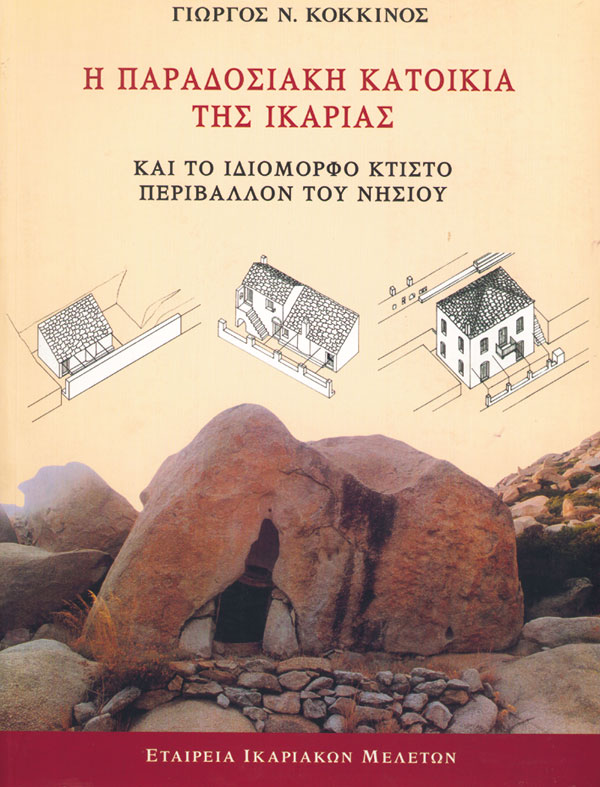
One of the main reasons is the fact that the vernacular architecture of other islands, such as the Cyclades, served as a key element in promoting their major tourist development during the second half of the 20th century (Mykonos, Santorini, etc.), in contrast to what happened in Ikaria.
However, perhaps the most important reason is the distinctiveness of Ikarian architecture compared to that of all other Aegean islands, as well as its essential and defining characteristic: precisely its lack of visibility—its modesty and concealment.
This book attempts to record the main types, forms, and particular features of the traditional Ikarian house as it was built on the island up until the establishment of modern construction methods, roughly until 1950, when reinforced concrete and the modern forms of housing it imposed began to spread dynamically. At the same time, it seeks to describe and interpret the unique urban structure of the island’s settlements, as well as to make brief reference to other buildings and constructions of particular interest.