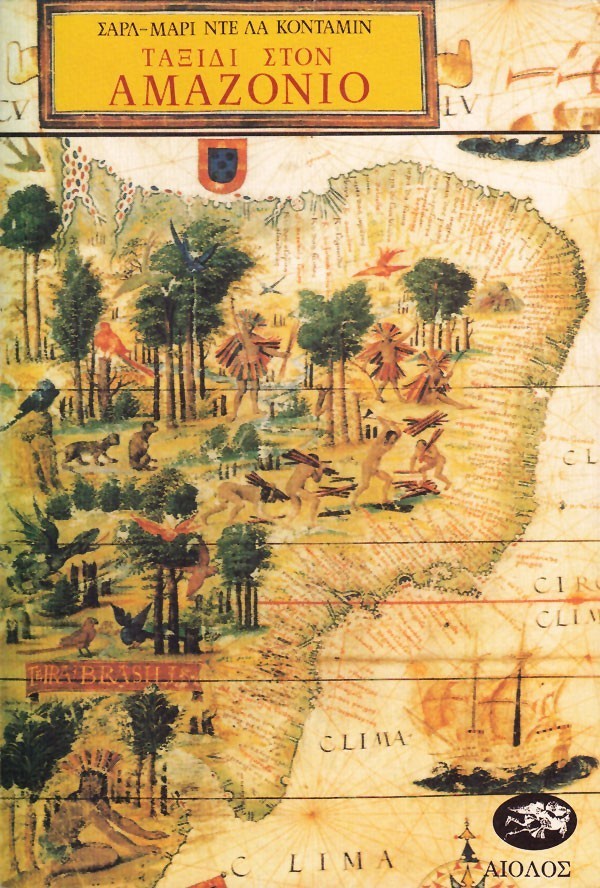
La Condamine, a French mathematician, tells us the legends and traditions, the customs and habits, the flora and fauna, the culture and religions he encountered in the Amazon region and surrounding areas when, from 1735 to 1745, he led a scientific expedition with the aim of mapping the Amazon and the Earth’s meridians, by order of the King of France, Louis XV.
In 1743 and 1744, while exploring the Amazon, he discovered rubber, which the Indigenous peoples were already widely using, and he became acquainted with quinine, both of which are very well known to us today.

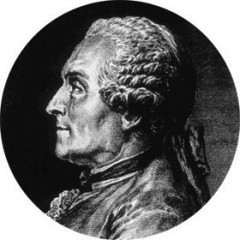
During the first half of the 18th century, only a few exploratory expeditions were carried out in South America. Perhaps the most important among them was the mission of Charles Marie de La Condamine (1701–1774), who travelled to the Amazon basin to map the region.
Charles Marie de La Condamine left France in 1735 as the leader of a scientific expedition.
For the Amazon specifically, he set out on 11 May 1743, traveling through Macapá and then Cayenne, and eventually departing from Paramaribo for Paris on 30 November 1744.
Overall, he spent nearly ten years in Central and South America. His journey produced significant results, as the Amazon was studied scientifically for the first time.
Charles Marie de La Condamine devoted himself entirely to this work, spending both his money and his health on the expedition. Like many pioneers, he was met with ingratitude and a lack of understanding upon his return.
Although his work is important, La Condamine might not have felt so proud if he had known what awaited the Amazon in later years. Nevertheless, he remains one of the first who applied his scientific knowledge to the benefit of Europeans, and to the detriment of a region still untouched and full of riches for all kinds of adventurers.