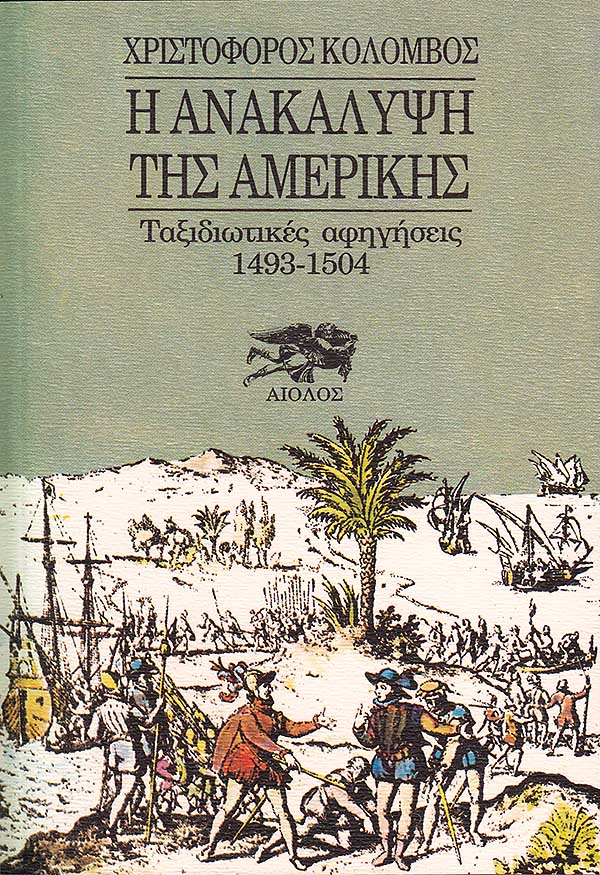
Travel Narratives 1493–1504
Through these pages of memoranda, letters, and reports—chiefly by Christopher Columbus—we see unfolding before us the fascinating adventures of his three subsequent voyages, after the first, to the Indies which he believed, until his death, that he had discovered. Beyond his visions, beyond the theocratic worldview of his time, and beyond the supposed sacred purpose of the Christianization of the Indigenous peoples, these voyages reveal even more strongly the desire for gold and the other riches found in those lands, for which he faced countless adventures on land and at sea, while Columbus himself, from Viceroy of the Indies, became the victim of slander at the court of the kings of Spain.

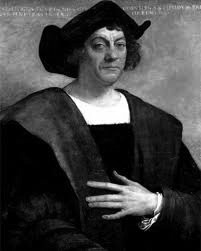
Christopher Columbus was a navigator, cartographer, admiral, and viceroy, best known for his voyage in 1492, which led to the European awareness of the Americas.
His origins remain a subject of debate, with several regions claiming to be his birthplace. However, the most widely accepted view is that he was born in 1451 in Genoa, Italy.
His father, Domenico Columbus, belonged to the middle class and worked in Genoa and Savona. His mother was named Susanna Fontarossa, and his brothers were Bartholomew, Giovanni Pellegrino, and Giacomo.
The kingdoms of Aragon, the Spanish Galicia region, Portugal, and the Greek island of Chios, among others, have all claimed his origins. Christopher Columbus died in Valladolid, Spain, in 1506 and was buried in a monastery in the city. Three years later, his remains were transferred to a monastery in Seville, and in 1537 to the Cathedral of Santo Domingo on the island of Hispaniola, along with the remains of his son Diego.
In 1795, Spain ceded the island to France, and both sets of remains were moved again to the Iberian Peninsula. However, there is a possibility that a mistake occurred during the transfers, since in 1877 a tomb was accidentally discovered in Santo Domingo bearing the inscription: “The Distinguished and Excellent Don Cristóbal Colón.”
Given the historical significance of his arrival in the Americas in 1492, the period before his voyage is referred to as “pre-Columbian.” His expedition marked the beginning of a violent colonization of the New World, as the American continent was alternatively called. It is also noteworthy that he never reached the mainland, but only islands nearby. He undertook four voyages to American territories.
Beyond the disputes, intrigues, and mutual accusations of these early colonizers, we once again discover the New World through the eyes of the narrators, and especially through the Admiral’s particular vividness, so that everything, without pause, seems like a fairy tale, since what is unprecedented will never cease to stir the imagination and to cover everything with magic, for all ages.