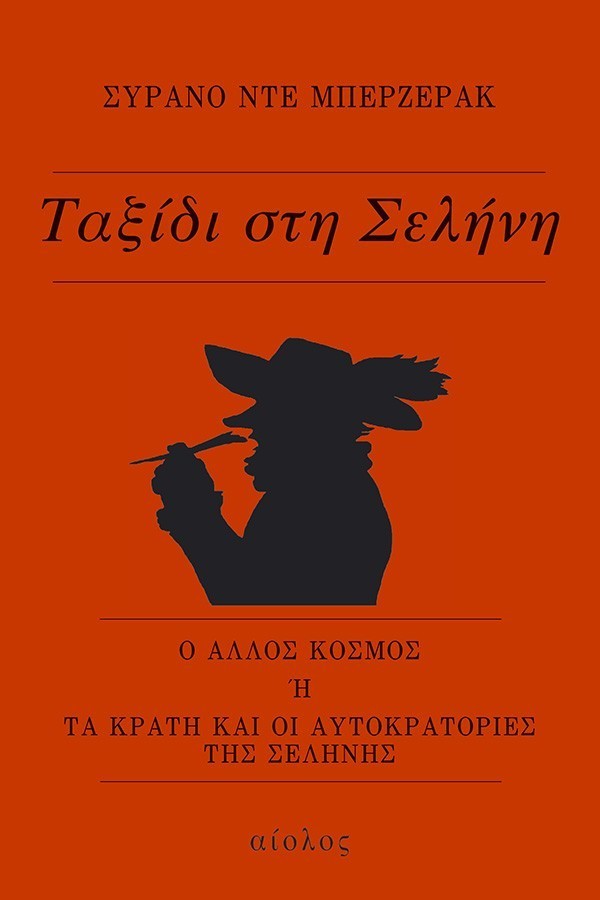
A large nose is a sign that a man of wit, prudence, courtesy, a man that is sweet-talking, brave and liberal lives here, while a small nose is the sign of relevant defects…
Cyrano, the famous bignose and symbol of the utopian traveler, does not lose his humor on the Moon, giving credit to noses…
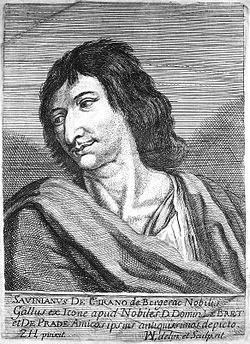
Cyrano de Bergerac (1619–1655) was a French novelist and duelist.
He became widely known not only because of the play Cyrano de Bergerac (1897) by his compatriot Edmond Rostand—later adapted many times for film—but also because he authored two of the earliest works of science fiction, drawing on the scientific and astronomical discoveries of his time.
These include Comical History of the States and Empires of the Moon and Comical History of the States and Empires of the Sun, the latter of which he did not complete before his death.
Like many of his contemporaries, Cyrano de Bergerac used the imaginary celestial worlds he created to highlight the insignificance of human existence within the vast universe surrounding it.
His journey gives us the opportunity to experience early science fiction and for him to criticize the morals of his time with humor, sarcasm and imagination. Deeply versed in the science and philosophy of antiquity up to that the present day, he invents -before they were actually invented- jet engines, the rocket, the microwave oven, the phonograph, the portable cassette recorder, electricity…
As for the moralists and the prim, they find a militant opponent, a sworn enemy. Thanks to Cyrano de Bergerac, made famous as a theatrical character by Rostand, we enjoy a unique Journey to the Moon and meet one of the freest spirits of all time.