Imagine three American MIA’s who chose to remain missing after the Vietnam War.
Imagine four generations of strong, alluring women who have some kind of mysterious connection to an outlandish figure from Japanese folklore.
Imagine all this (don’t even try to imagine the love story the author is telling) and you’ll have a foretaste of Tom Robbins’s eighth and perhaps most beautifully crafted novel – a work as timeless as myth yet as topical as the latest international threat.
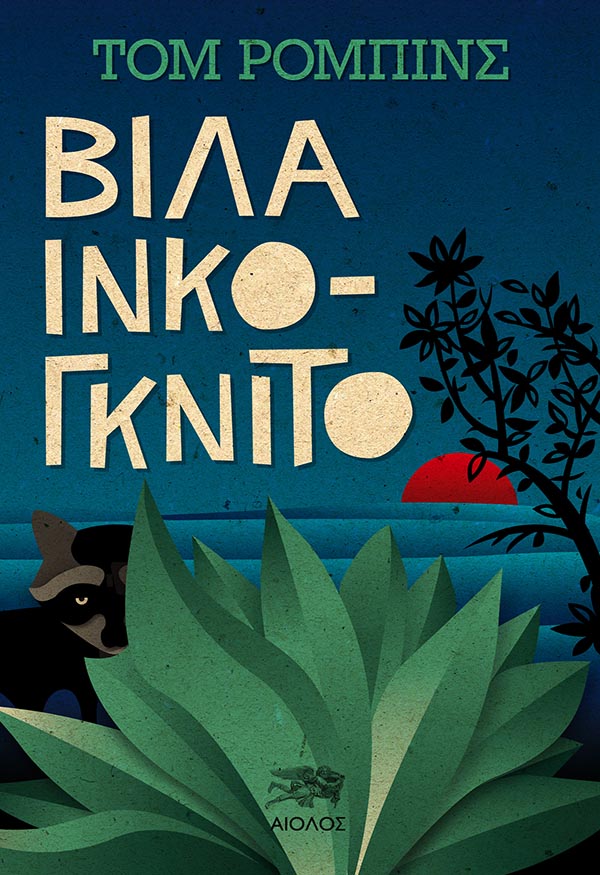
Tom Robbins is an American writer born on July 22, 1936, in Blowing Rock, North Carolina.
His novels are known for their intricate, often fantastical storytelling, with a strong satirical undercurrent and a dense layering of unusual, quirky, and carefully researched details.
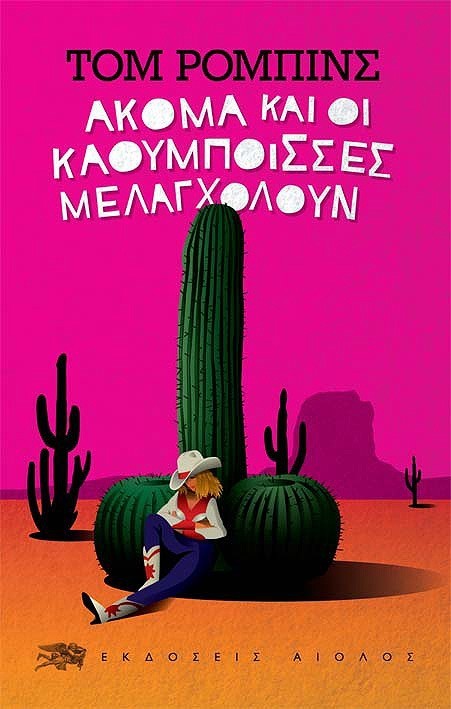
Tom Robbins’s novel Even Cowgirls Get the Blues was adapted into a film in 1993 directed by Gus Van Sant and starring Uma Thurman.
In 1954, Robbins enrolled at Washington and Lee University in Lexington, Virginia, but left due to disciplinary issues. He later moved to New York City intending to become a poet, but eventually enlisted in the Air Force under the threat of conscription and served for three years in Korea.
While stationed there, he studied meteorology and became involved in extensive black-market trade of goods such as soap and toothpaste. He later joked that he “helped Mao get his toothpaste.”
After returning to civilian life in Richmond, Virginia, in 1960, he attended the Richmond Professional Institute (later Virginia Commonwealth University), where he served as editor of the student newspaper and worked at the Richmond Times-Dispatch.
He later pursued graduate studies in Eastern philosophy at the University of Washington in Seattle, working for both The Seattle Times and Seattle Post-Intelligencer. Since 1970 he has lived in La Conner, Washington, and received the Golden Umbrella Award at Seattle’s Bumbershoot Festival in 1997.
On one level, this is a book about identity, masquerade and disguise – about “the false mustache of the world” – but neither the mists of Laos nor the smog of Bangkok, neither the overcast of Seattle nor the fog of San Francisco, neither the murk of the intelligence community nor the mummery of the circus can obscure the linguistic phosphor that illuminates the pages of Villa Incognito.
Villa Incognito offers an unbridled and entertaining way of celebrating existence itself while at the same time challenging our ideas about it.