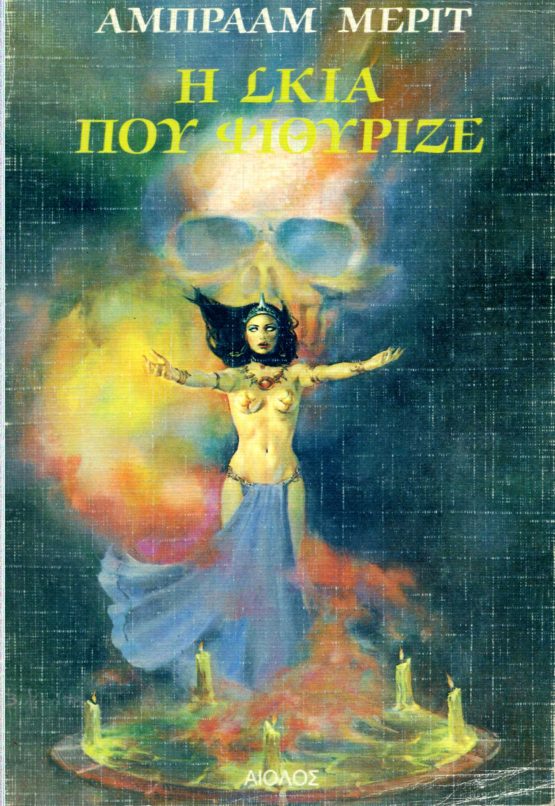
Abraham Merritt (1884–1943) was one of the best-known authors of early 20th-century fantasy literature.
He was among the highest-paid journalists of his time, which allowed him not only to write short stories and novels in his spare time, but also to travel extensively, cultivate exotic plants, and build a private library said to contain around five thousand books on occult subjects.
His busy professional life did not allow him to devote extensive time to literature. He wrote his novels and a small number of short stories in the margins of this demanding career, which explains his relatively limited literary output.
His first literary appearance came in 1919 with the publication of The Moon Pool. Other important works include The Face in the Abyss, The Ship of Ishtar, Seven Footprints to Satan, Burn, Witch, Burn!, and The Dwellers in the Mirage.
Although he is not primarily known for originality, he possessed a rare ability to create imaginative fantasy worlds through vivid creative vision. Abraham Merritt had a significant influence on H. P. Lovecraft, who admired him greatly.