Giorgos Makris was born in 1929 in Phthiotis and studied in Athens, at Varvakeio High School and at the National Technical University of Athens, from which he graduated in 1952 (School of Surveying Engineering).
He worked professionally as a surveyor engineer, practicing in Greece and abroad.
Giorgos Makris served as a scientific associate at the Department of Geodesy and Cartography at the National Technical University of Athens (1977–1984) and, since 1992, has been an honorary member of the Technical Chamber of Greece.
He collaborated with Professor St. Papageorgiou on the book Land Communication Network in the State of Ali Pasha(Papazisis, 1990). He later wrote the historical article “Church and Revolution (1831–1832): The Relations of the Ecumenical Patriarchate with the National Movements,” published in a collective volume dedicated to Alexandros I. Despotopoulos (Papazisis, 1995).
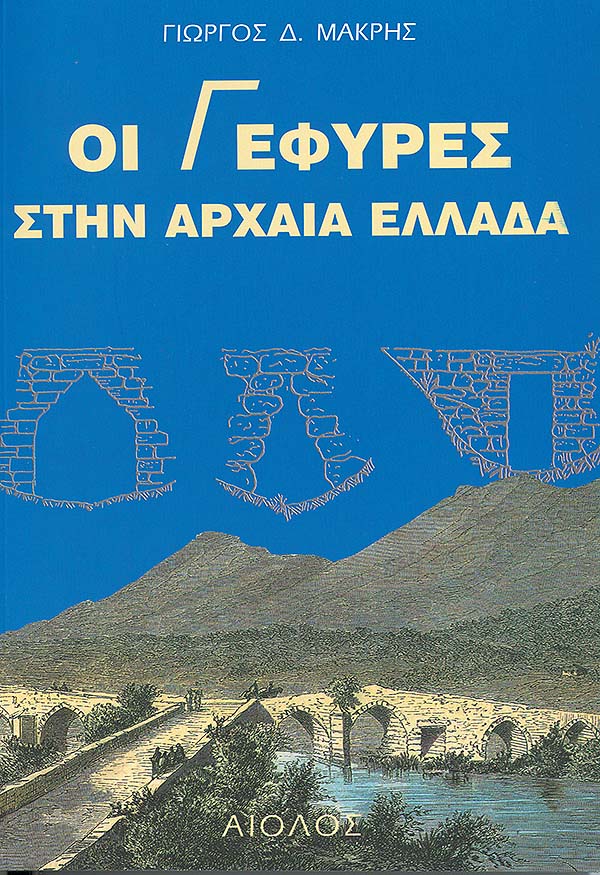
In 1997 he participated in the 1st International Conference on Ancient Greek Technology in Thessaloniki, presenting the paper “The Technology of Bridge Construction in Ancient Greece,” and in 2002 he presented “An Approach to Bridge Construction in Ancient Greece” at a conference of EMAET at the Technical Chamber of Greece.
He has also published various studies in Technika Chronika and the bulletin of the Hellenic Military Geographical Service.