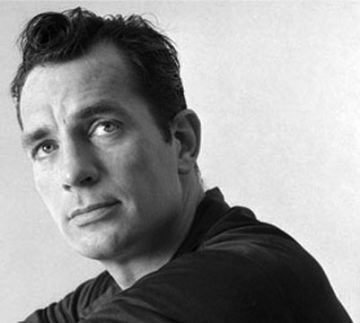
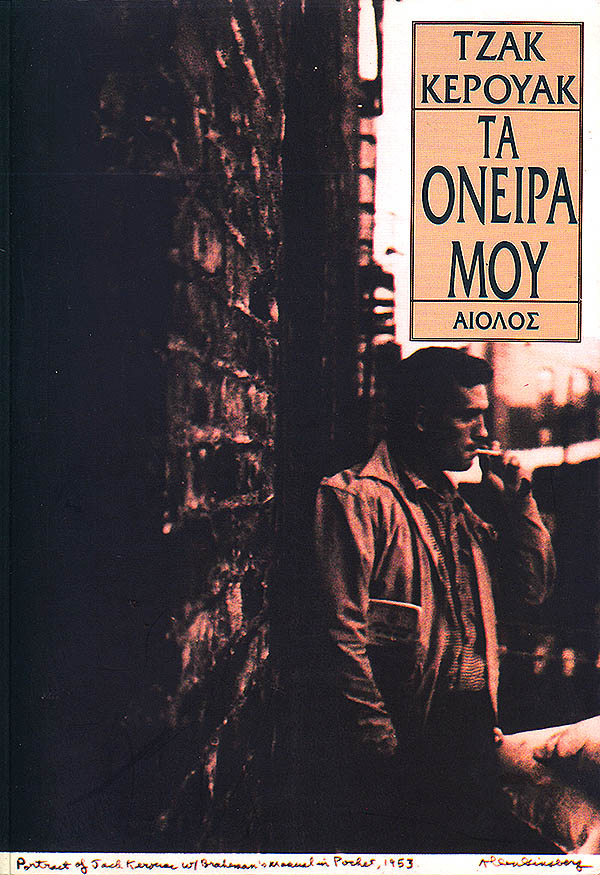
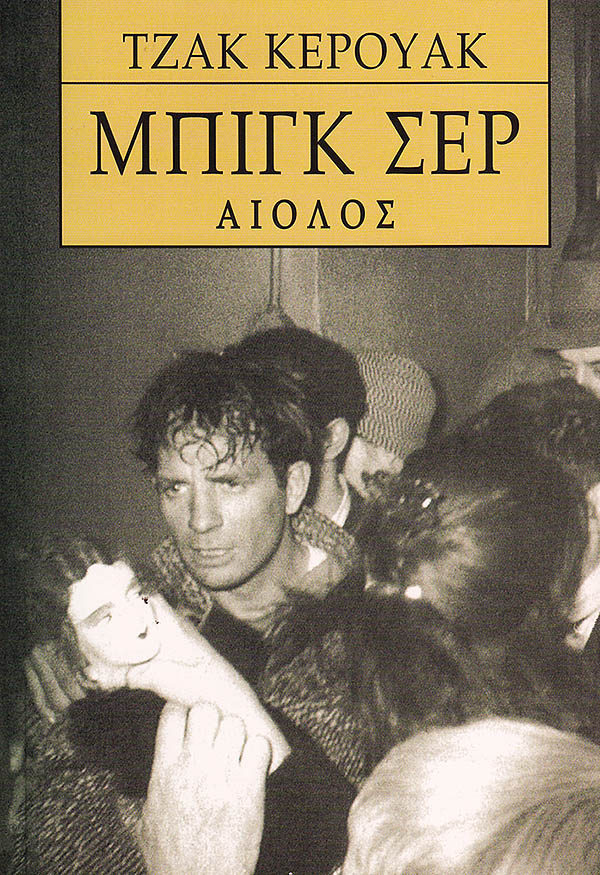
He was born in Lowell, Massachusetts, in 1922. From an early age, he showed a strong inclination toward the arts, creating his own magazines, which he also illustrated himself.
As he grew older, he became a skilled athlete, particularly in baseball and, above all, American football.
He received a sports scholarship and began studying at Columbia University for free. There, he came into contact for the first time with several future members of the Beat Generation literary movement, such as Allen Ginsberg and William Burroughs.
In his second year, he dropped out of university, initially intending to enlist in the army. He returned to his hometown and later moved to Boston, working various jobs. He briefly resumed his studies at university, only to drop out again soon after.
He formed close friendships with Lucien Carr, Allen Ginsberg, William S. Burroughs, and Neal Cassady. In 1949, he made his first journey from New England to San Francisco. Over the following decade, Kerouac traveled extensively across the United States and Mexico, sometimes driving with Cassady and other times hitchhiking. These experiences of wandering became the foundation of his famous novel On the Road.
Around 1955, he began studying Buddhism and became deeply involved in meditation. After the publication of On the Road in 1957, he began writing The Dharma Bums. During the 1950s, he gained significant fame and gave numerous public readings of poetry and prose, often accompanied by jazz music in New York.
He also contributed articles to magazines such as Playboy, Swank, Holiday, Escapade, and Esquire. In 1961, he moved to Big Sur, California, where he wrote his final semi-autobiographical novel Big Sur.
He died at the age of 47 on October 20, 1969, from internal bleeding caused by liver cirrhosis. He is regarded as one of the central figures of the Beat Generation and the originator of the term itself.