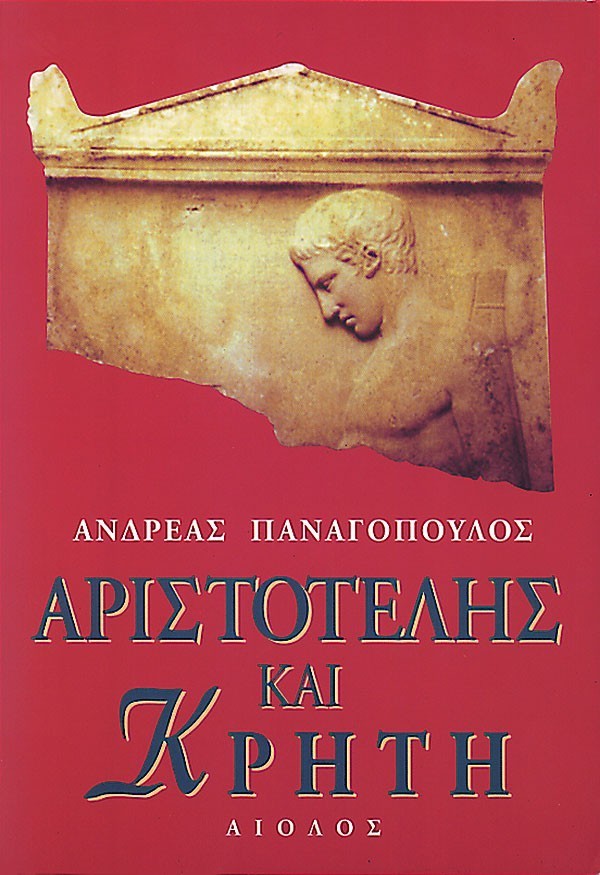
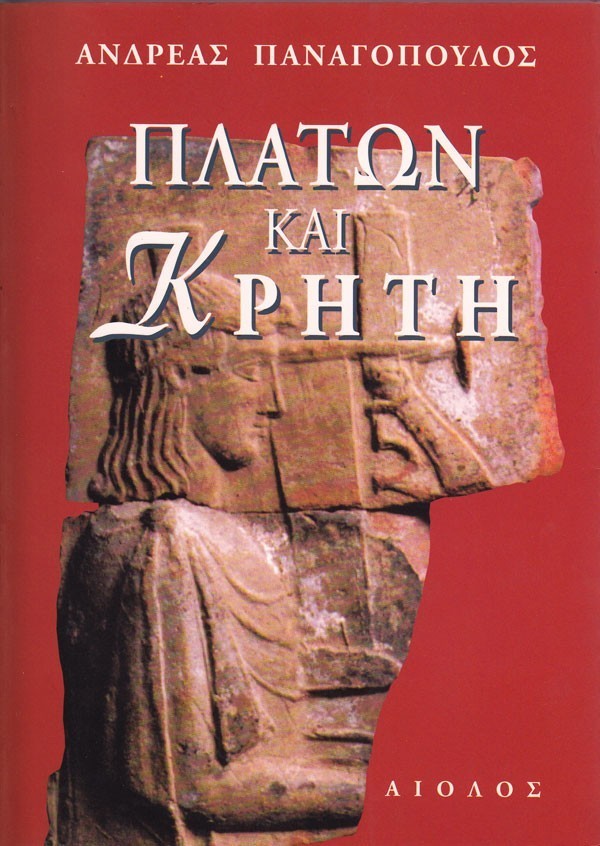
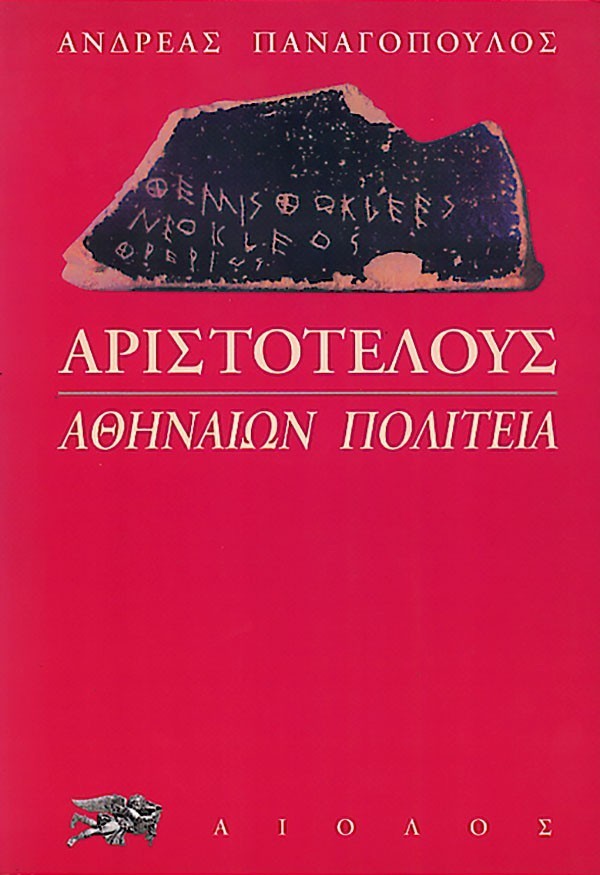
The author sheds light on Aristotle’s knowledge of Crete. The so-called “Cretan Constitution” (from Book II of the Politics) replaces the lost corresponding section of the Collection of Constitutions and represents an approach that is mainly political or constitutional (as opposed to Plato’s primarily legal and legislative approach and Ephorus’ mainly ethnographic and educational one). The relevant information comes from second-hand sources, possibly from students of the Lyceum.
Andreas Panagopoulos was a distinguished PhD graduate of the University of London.
He studied at the Universities of Athens, Freiburg, and London, and has taught at the University of Crete, the University of Patras, as well as at Princeton, Rutgers, Lehigh, Queen’s University (New York), Humboldt University (Berlin), Nankai University (China), and the University of Bologna.

Andreas Panagopoulos resigned from his position as assistant in Athens in November 1967 and subsequently taught in private education.
He returned to the university after the restoration of democracy in Greek higher education in 1974. In February 1998, he was elected professor in the Department of Philology at the School of Humanities and Social Sciences of the University of Patras (this election is mentioned twice in the original text).
He worked extensively on Thucydides, Plato, and Aristotle, as well as on comparative philology and literary criticism. He specialized in the use of electronic tools (THESaurus Linguae Graecae) for research and teaching in Classical Philology, supported by a Fulbright scholarship.
He authored numerous books and also translated works from Ancient Greek, Latin, English, and Spanish. He wrote book reviews for Kathimerini, contributed articles to Ardην, and produced the television program We and the Ancients. He was also the founder and president of the Hellenic Blood Donors Association (ST.ELL.A.).
He passed away in June 2009. Five of his books are published by our publishing house.
Despite the general acceptance of the centralized system of Doric Crete, the Stagirite (Aristotle) criticizes many of its institutions, especially the lifetime tenure of the “Kosmoi” (equivalent to the Spartan Ephors).
The work was praised by respected and distinguished scholars (Irmscher, Huxley, etc.).