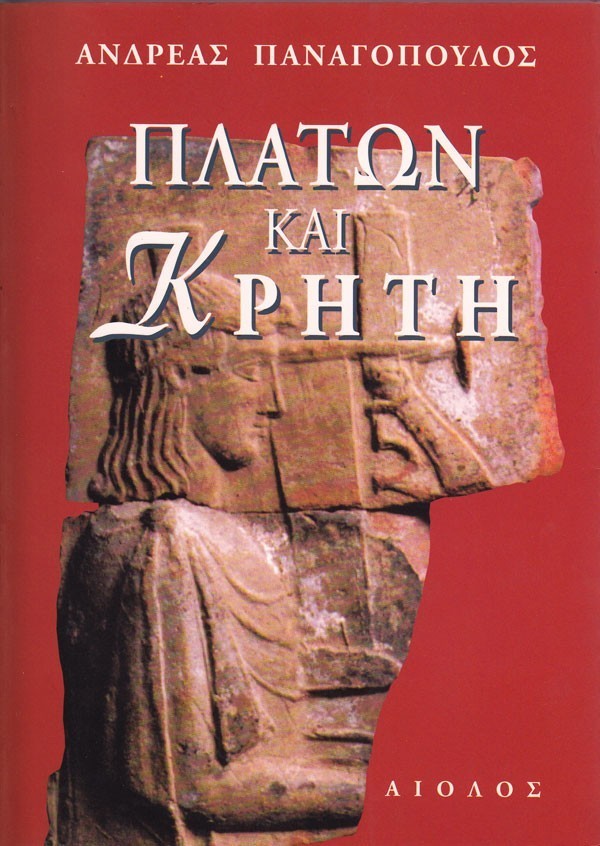
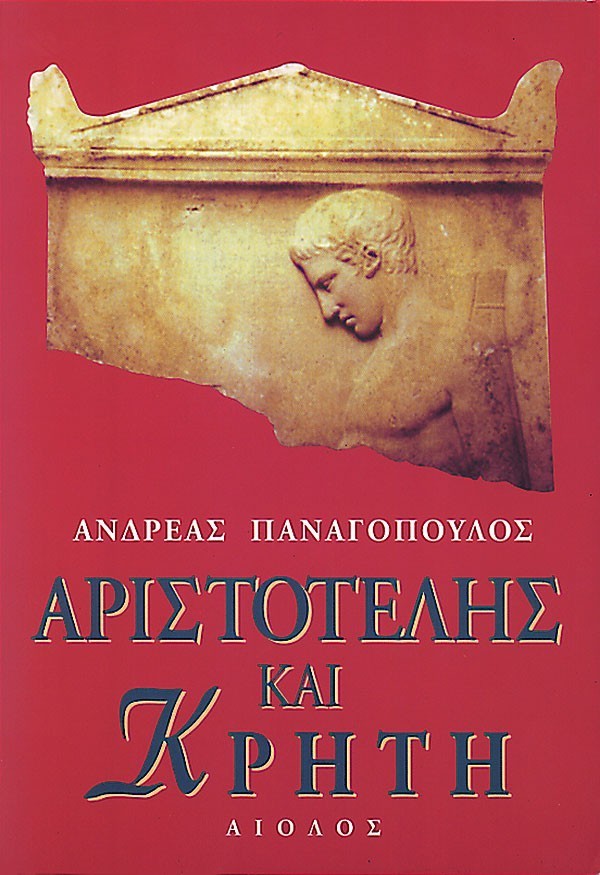
In this work, Associate Professor Andreas Panagopoulos demonstrates that Wilamowitz’s claim that “Plato scarcely knew more about Crete than the average person of his time” was mistaken. The 58 Platonic passages dealing with Cretan subjects, together with their analysis, show that Plato was very well acquainted with Dorian Crete—perhaps even through firsthand knowledge.
Andreas Panagopoulos was a distinguished PhD graduate of the University of London.
He studied at the Universities of Athens, Freiburg, and London, and has taught at the University of Crete, the University of Patras, as well as at Princeton, Rutgers, Lehigh, Queen’s University (New York), Humboldt University (Berlin), Nankai University (China), and the University of Bologna.

Andreas Panagopoulos resigned from his position as assistant in Athens in November 1967 and subsequently taught in private education.
He returned to the university after the restoration of democracy in Greek higher education in 1974. In February 1998, he was elected professor in the Department of Philology at the School of Humanities and Social Sciences of the University of Patras (this election is mentioned twice in the original text).
He worked extensively on Thucydides, Plato, and Aristotle, as well as on comparative philology and literary criticism. He specialized in the use of electronic tools (THESaurus Linguae Graecae) for research and teaching in Classical Philology, supported by a Fulbright scholarship.
He authored numerous books and also translated works from Ancient Greek, Latin, English, and Spanish. He wrote book reviews for Kathimerini, contributed articles to Ardην, and produced the television program We and the Ancients. He was also the founder and president of the Hellenic Blood Donors Association (ST.ELL.A.).
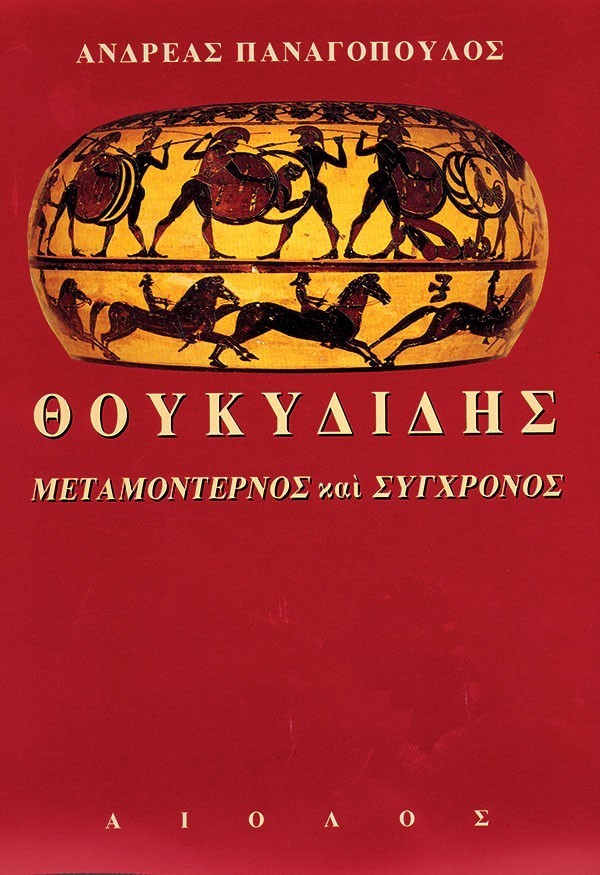
He passed away in June 2009. Five of his books are published by our publishing house.
Here, Plato does not use history as an ancilla philosophiae (“handmaiden of philosophy”). Rather, as a mature lawgiver and social reformer, he demonstrates a thorough understanding of all three levels of the island’s reality and proposes institutions that continue to engage humanity—not only from a philosophical and historical perspective—even today. These three levels are: (a) the present (Dorian Crete), (b) the past (Minoan Crete), and (c) the future (the legislative framework for a new city-state).
The work was highly praised by both Greek and international scholars and critics, leading to an invitation for the author to serve as a reviewer for the international classical studies journal The Classical World.