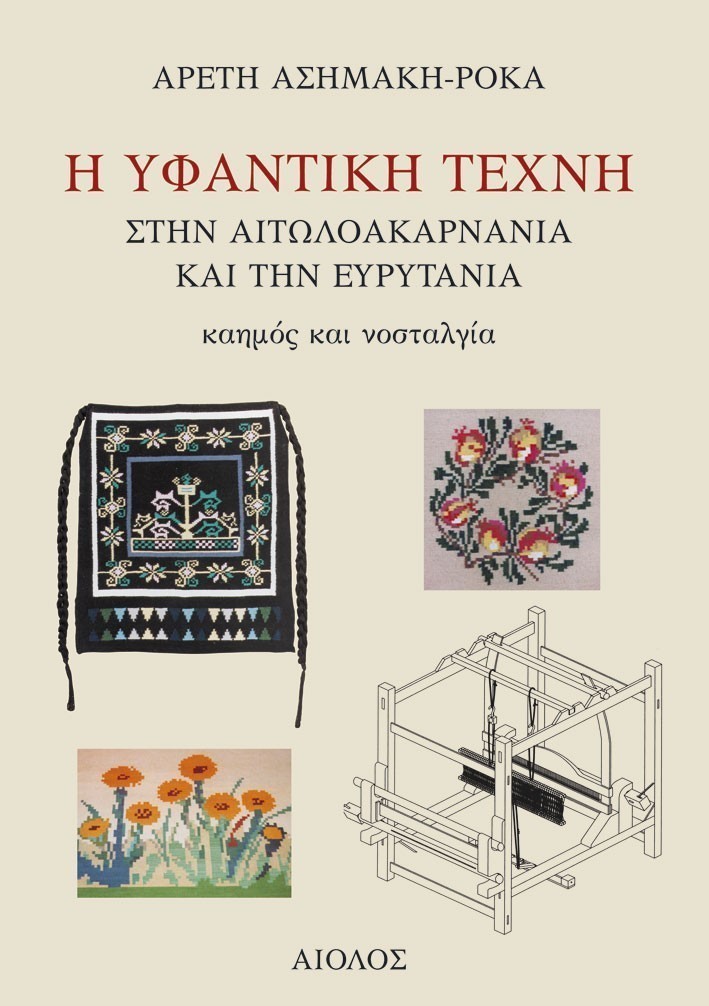
Areti Asimaki-Roka was born in Agrinio to a farming family. She graduated from the Third Six-Year Primary School of Agrinio and, from the age of twelve, devoted herself professionally to the art of traditional weaving.
In 1955, she founded the Professional Workshop of Traditional Weaving and Folk Art in Agrinio, which she directed and operated until 1985.
In parallel, she taught at the KEGE of Messolonghi from October 1963 to December 1965. Later, from 1999 to 2002, she worked as an instructor of traditional folk weaving at the Special Vocational Education and Training Workshop “Panagia Eleousa” in Messolonghi.
Throughout these years, she continued to practice traditional weaving while also providing education and employment opportunities to unemployed and unskilled young women.
She has taken part in folk art exhibitions and in events dedicated to traditional arts and cultural heritage.