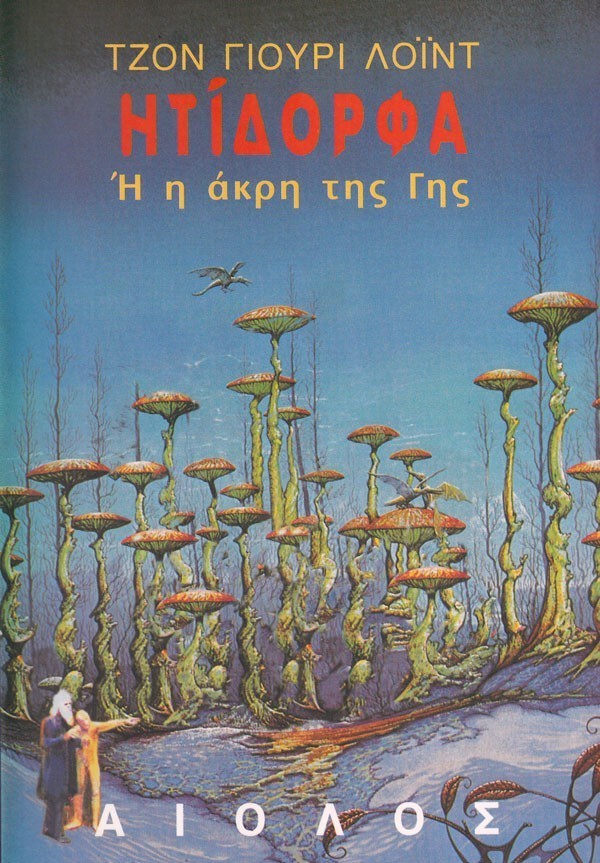
When H.P. Lovecraft visited the vast caverns of Virginia, he remembered that “strange old novel Etidorhpa”, where, in a magical way, the theory of the Hollow Earth is developed.
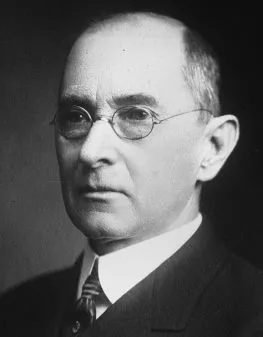
Today no one remembers that the first person to mention the possibility of the Earth being hollow was the great astronomer Edmond Halley in 1692. But the fame of Etidorhpa and its mysterious author John Uri Lloyd (1849-1936), a great scientist and an avid student of ancient alchemical traditions, remains.
John Uri Lloyd was born in West Bloomfield, USA, in 1849.
He spent most of his life in Cincinnati and died in 1936 in Los Angeles.
He later served as Professor of Pharmacy at the College of Cincinnati and spent his life working with the Lloyd Library of Botany and Pharmacology.
He published works such as Chemistry of Drugs and Elixirs, compiled a pharmaceutical encyclopedia, and, as an editor, released numerous books on pharmacology.
His book Hytidorpha is considered his most significant work related to the concept of a journey to a “hollow earth,” and it is said to have influenced the “master of horror” writer H. P. Lovecraft.

So what is Etidorhpa? A scientific hypothesis about Hollow Earth? A phantasmagorical alchemical and occult allegory? A novel describing the inner maturation of a genius? Critics are hesitant to decide. Let the reader decide.