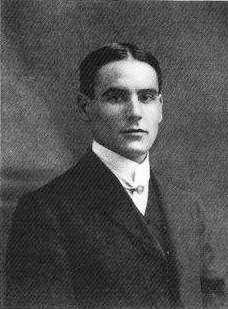
William Hope Hodgson, one of the most important pioneering writers of fantasy literature, was born in 1875 or 1877 in Essex, England. He went to sea at the age of 15 and spent eight years of his life at sea, circumnavigating the globe three times.
Returning to England, he first worked as a physical education instructor and later as a journalist. He was considered an eccentric and unusual man. It is even said that he was the only person who managed to keep the magician Houdini bound for two full hours.
With the outbreak of the First World War, William Hope Hodgson volunteered for service and was killed in 1918.
He was undoubtedly deeply influenced by his experiences at sea. Two features define his work: his remarkable ability to sustain an atmosphere of horror, uncertainty, and subtle dread, and his distinctive use of the sea as a setting in which the Unknown dwells, with terrifying forms and manifestations.
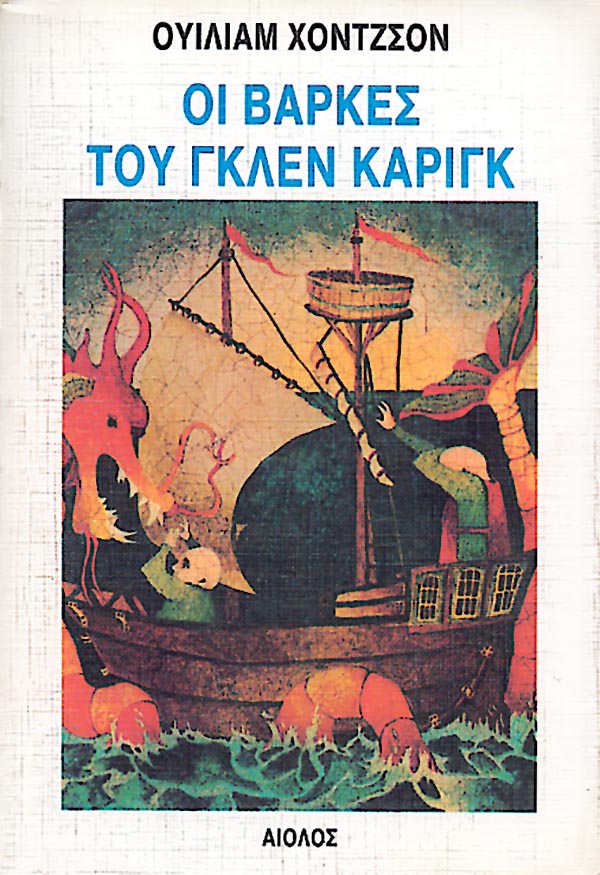
During his short literary career, he published fourteen books, including novels, short story collections, and two volumes of poetry. One of his most important works published by our press is The Boats of Glen Carrig.