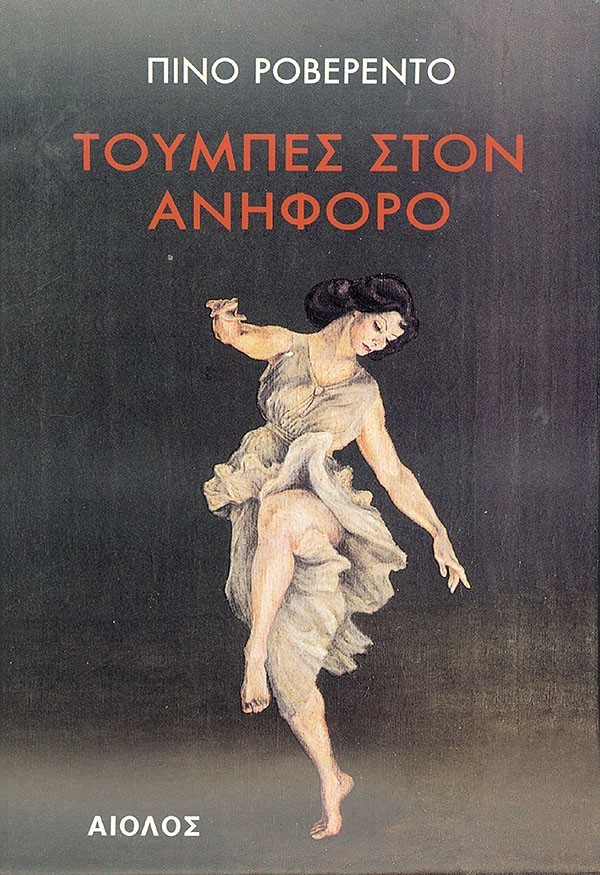
Pino Roveredo’s life, as he describes it in this book, was difficult and violent: it is summed up in his birth to deaf and dumb parents; in his “dizziness from his first cigarette”; in his years in the boarding school from which he had to escape; in his addiction to alcohol as a reaction to his meaningless fate; in the madhouse, the last refuge of society’s outcasts, but also a sanctuary for the muffled and unquenchable pain that teaches you that you absolutely must endure; and in prison, which is a separate world, more real than reality itself because of the cruelty it shamelessly displays without being subjected to any moral or social censure.
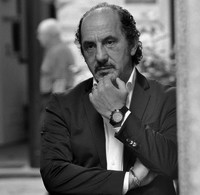
Pino Roveredo was born in Trieste in 1954 into a family of craftsmen; his father was a shoemaker.
After various life experiences, he worked in a factory as a laborer. He also worked as a street cleaner, writer, journalist, and collaborator for Il Piccolo, the newspaper of Trieste.
Pino Roveredo is a member of several humanitarian organizations focused on marginalized people.
Among his works are “Pitsilies krasi sti soupe” (2000) and “Choréuontas me ti Séselia” (2000), the latter adapted into a theatrical production presented at the Todi Festival.
In 2005, the Italian publishing house Bompiani published his short stories in a collection titled “Send Me a Message”, which received several awards, including the Campiello Prize, the Predazzo Prize, the ANMIL Prize, and the Il Campione Prize.
He also actively participates in Greenpeace’s campaign “Writers for the Forests.”
Then the picture changes, however: his life has reached a dead-end, his marriage to Luciana, the woman in the “amazing white satin wedding dress”, is like a barrier between two incompatible ways of life, the slow self-destruction and the possible revival he is breathlessly seeking himself; and when one day he is on the verge of timidly changing his life, and the change is based entirely on willpower, he tells himself: “I have to follow my quick step which now takes me on the straight road.”
Pino Roveredo’s autobiographical narrative has no frills and is distinguished by the “narrator’s” need to tell true things, which, once read, are never forgotten. Because they are pure as he is.