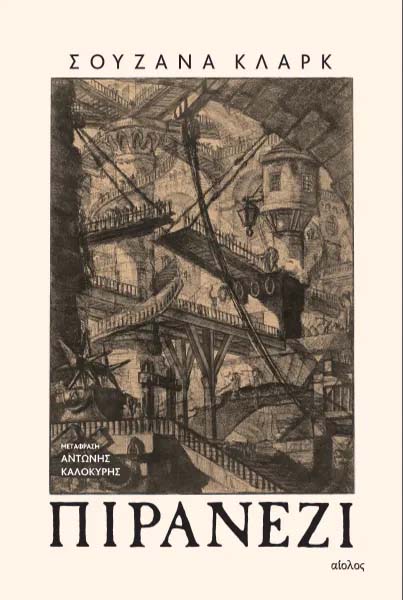
Endless corridors, infinite halls, thousands of statues: this is the House of Piranesi, its sole inhabitant, devoted to exploring and meticulously documenting it. Time is measured by the tides that regularly flood the labyrinthine structure and by the visits of the Other, who comes to learn about the progress of the research.
But when Piranesi discovers traces of a third person, he is confronted with a truth greater than the House itself…
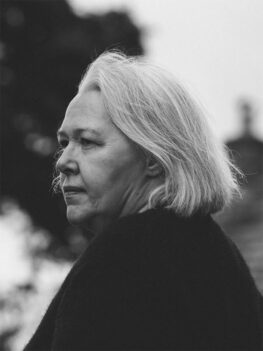
Susanna Clarke was born in Nottingham, England, in 1959. The daughter of a Methodist minister, she studied History, Philosophy, and Politics at St Hilda’s College, Oxford.
She worked as a commissioning editor for publishing houses. In the early 1990s, she taught English in Turin and Bilbao before returning to England, where she resumed her career in publishing.
During this period, she began writing the novel Jonathan Strange & Mr Norrell, which was published in 2004 to critical acclaim and commercial success, winning major awards including the Hugo Award, the Locus Award, and being named Best Novel of 2004 by Time magazine.
In 2015, it was adapted for television as a BBC miniseries. This was followed in 2006 by the short story collection The Ladies of Grace Adieu and Other Stories.
In the years that followed, Clarke’s health deteriorated and she was diagnosed with chronic fatigue syndrome. Her writing pace slowed significantly, and plans for a sequel to Jonathan Strange & Mr Norrell were put on hold.
In 2020, during the pandemic, she published Piranesi, which also achieved critical and commercial success, was translated into 31 languages, and won the Women’s Prize for Fiction.
Susanna Clarke lives in Manchester with her partner Colin Greenland, a writer and critic.

Piranesi is no ordinary house: endless corridors, infinite halls, thousands of statues, each unlike any other. The upper levels are shrouded in clouds, while an entire ocean regularly floods the lower chambers of the labyrinthine House.
Piranesi is undaunted. By carefully observing the tides, he measures time according to their rhythm. Tirelessly, he explores the labyrinth of the House and records its contents. It is the work of his life.
But Piranesi is not alone in the House. There is also the Other, who visits twice a week to learn about the progress of the research. Yet when these investigations begin to reveal the existence of another person, a new and terrifying reality slowly emerges — the reality of another world beyond the one Piranesi has always known.
Piranesi draws us into a parallel, dreamlike reality and an endless labyrinth: a breathtaking world of eerie beauty, haunted by tides and clouds. Winner of the Women’s Prize for Fiction, the novel has been translated into thirty-one languages.