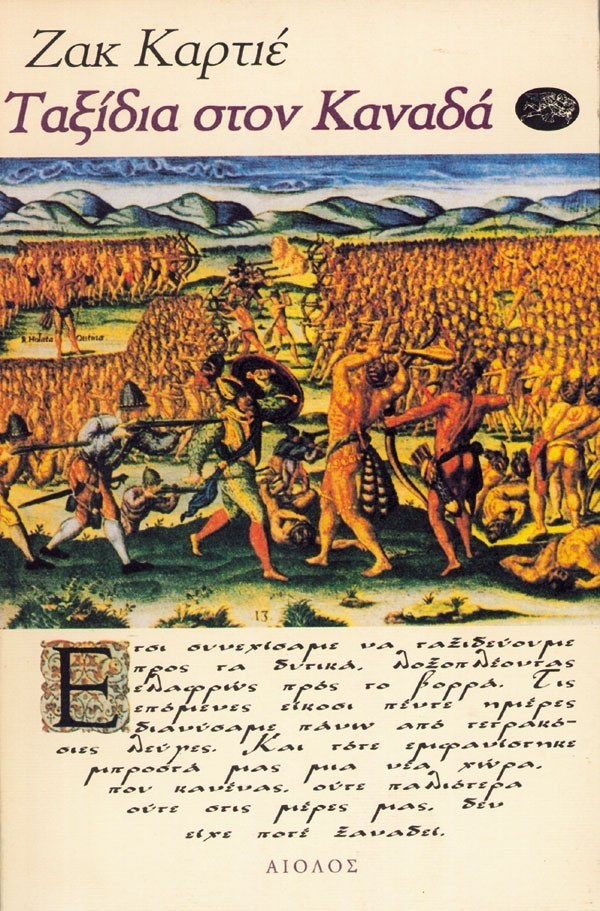
From the early 16th century, French sailors had begun travelling to America. The first significant voyage to North America was carried out by Giovanni da Verrazzano in 1524, who was searching for a direct sea route to Cathay, the land of silk. Instead of Cathay, he discovered an unknown, new land.
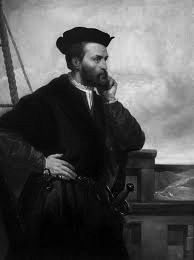
Jacques Cartier was born in 1491 in Saint-Malo. He came from a respected maritime family, but further improved his social standing by marrying Catherine des Granches in 1520, the daughter of a shipowner.
Cartier was introduced in 1532 to King Francis I of France by Jean Le Veneur, then abbot of the Mont-Saint-Michel monastery.
This encounter proved decisive for Cartier’s exploratory career, as, by royal commission, he undertook three voyages to the New World (First Voyage: 1534; Second Voyage: 1535–1536; Third Voyage: 1541–1542).
Cartier spent his final years in Saint-Malo, where he died in 1557 from a plague epidemic at the age of 66. Although Jacques Cartier did not become wealthy from his discoveries, he is now regarded as one of the pioneers in the formation of Canada. He was, in fact, the first to use the name “Canada.”
Cartier is also considered to have been an exceptionally skilled navigator for his time. The only significant losses he suffered occurred on land, due to epidemics or attacks by Indigenous peoples. His written accounts were also highly important, as they introduced Europe to North America.
After Verrazzano comes Jacques Cartier, sent by Francis I to find a passage to Cathay and to discover islands rich in gold. These goals were never achieved, but Cartier, on July 24, 1534, annexed Canada to France. In 1535, Cartier set out on his second voyage, now searching for the mythical Saguenay. Once again his plans failed, but he advanced even further north, discovering new regions. The third voyage, in 1541, was undertaken to implement the colonial doctrine, according to which Canada was to be colonized by the French and brought under their control. And thus, with Cartier as captain, Jean-François de La Rocque, Sieur de Roberval, became admiral and first governor of Canada. Beyond the historical significance of these events, at the dawn of colonialism, there is always the romantic enthusiasm of the traveler, who innocently observes—and narrates—the customs of new peoples, unknown animals and plants, and the uniquely rich nature of North America.