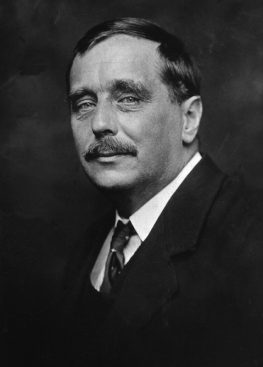
H. G. Wells was born in 1866 in Bromley, London.
In his youth he was forced to leave school in order to support his family financially. He later returned to education and studied Natural Sciences.
H. G. Wells worked as a biology teacher, but his health soon forced him to turn exclusively to writing and journalism.
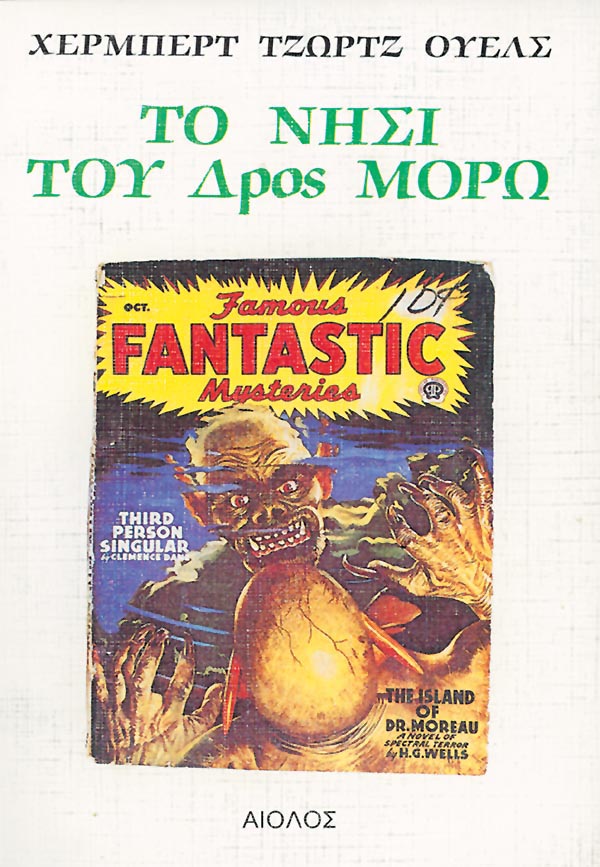
His classic works include The Time Machine (1895), The Island of Doctor Moreau (1896), The Invisible Man (1897), The War of the Worlds (1898), and The First Men in the Moon (1901). In these novels, his characters are placed in extreme life-or-death situations as a result of the rapid and unpredictable development of science and technology. The combination of moral questions with vivid action and boundless imagination contributed to the immediate commercial success of his books.
He also wrote realist fiction inspired by his difficult childhood, popular science and history works, and political and social essays expressing his progressive ideas.
An active socialist and pacifist, he was one of the most influential intellectuals of his time, frequently intervening in international debates. He died in London in 1946.