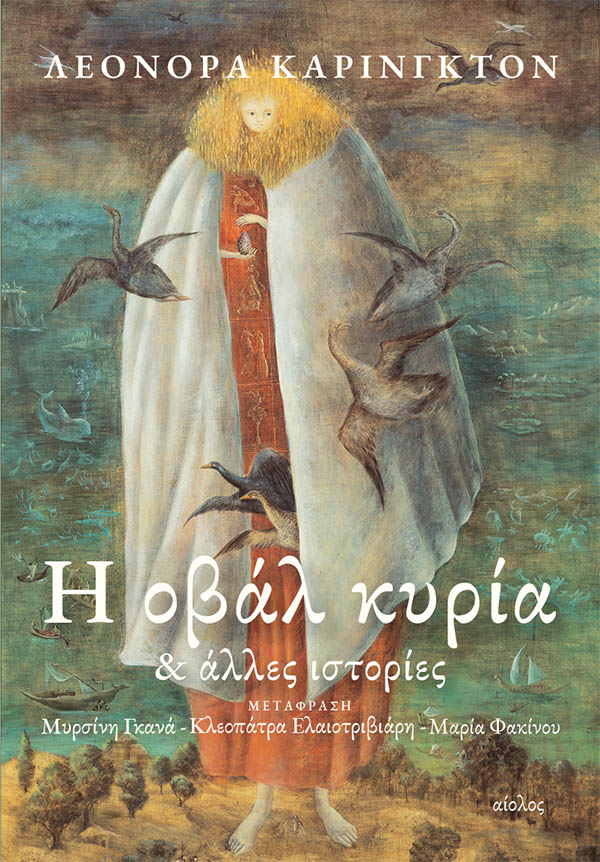
This edition gathers, for the first time, all the short stories of the surrealist writer and painter Leonora Carrington. Her transcendent imagination, biting satire, and rebellious spirit are distilled to perfection in these brief stories, originally written in three different languages.
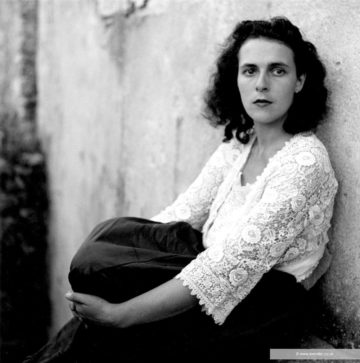
Leonora Carrington (1917–2011) was born in Lancashire, England, to an English father and an Irish mother. She grew up surrounded by the legends told to her by her Irish nanny at the family estate in Crookhey Hall.
Carrington was expelled from two convent schools before enrolling at an art school in Florence.
In 1937, one year after her mother gave her a book featuring the surrealist paintings of Max Ernst, she met the artist in person. Soon after, Carrington and the then-married Ernst settled in southern France, where in 1938 she completed her first major painting, Self-Portrait (The Inn of the Dawn Horse).
Following Ernst’s imprisonment by the Nazis, Carrington fled to Spain, where she was admitted to a psychiatric clinic in Madrid. She eventually took refuge at the Mexican embassy in Lisbon and, through her marriage to the diplomat and poet Renato Leduc, traveled to the Americas, first settling in New York and later in Mexico.
There, she married photographer Imre Weiss and had two sons. Carrington spent the rest of her life in Mexico City, within a circle of like-minded artists that included Remedios Varo and Alejandro Jodorowsky.
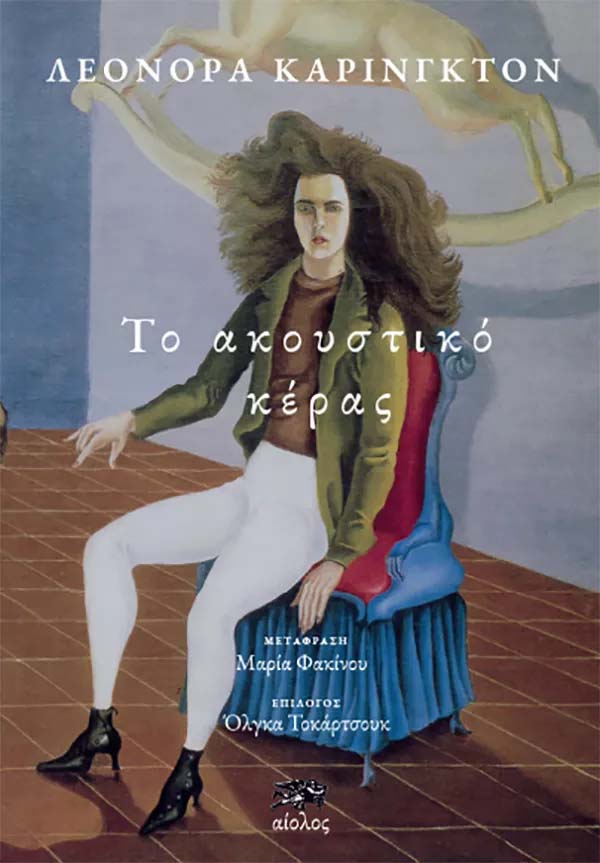
Her published works include the novel The Hearing Trumpet (1976), two collections of short stories, and Down Below(Greek edition: Ars Nocturna, 2020), a memoir of her confinement in a psychiatric hospital.
The Milk of Dreams, a collection of illustrated stories written for her children, gave its title to the 59th Venice Biennale (2022), bringing renewed attention to Carrington and her work.
Painter and writer Leonora Carrington (1917–2011) possessed a singular mastery of the macabre: she could conjure dazzling images, wield razor-sharp satire, scandalize through mockery, and slip effortlessly into worlds of pure imagination.
Nowhere did she channel this temperament and artistry more brilliantly than in the short stories she wrote throughout her life.
With astonishing shifts in style, tone, subject matter, and even language (English, French, and Spanish), these stories capture the brilliant and untamed spirit of this extraordinary woman. André Breton described them as “the very embodiment of black humor.”
Indeed, what seems excessive or bizarre to us was, for Carrington, simply ordinary life. How could it be otherwise, when as a little girl all she wished for was to learn how to walk a few inches above the ground?
This edition follows the most complete and definitive collection of Carrington’s stories, published in 2017 to mark the centenary of her birth.

“Her distinctive literary legacy deserves our attention.”
“The Oval Lady portrays the destruction of imaginative freedom by patriarchal power.”