Deep beneath the earth, forty women are imprisoned in a single cell. Under constant guard and severed from the outside world, they no longer know how they arrived there or how much time has passed. Only dim, fragmentary memories remain of the lives they once knew.
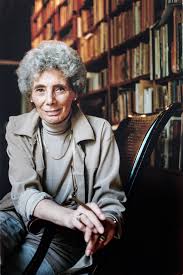
Jacqueline Harpman was born in Belgium in 1929.
She wrote more than 15 novels and received major literary awards, including the Prix Médicis for Orlanda.
Her family fled to Casablanca during the Nazi occupation and returned to their homeland after the war. After studying French literature, she began medical studies, but was unable to complete them due to tuberculosis. She turned to writing in 1954, and her first published work appeared in 1958.
In 1980, she qualified as a psychoanalyst. Harpman wrote more than 15 novels and received major literary awards, including the Prix Médicis for Orlanda. She died in 2012.
But the youngest among them, the unnamed narrator known only as “the child,” remembers nothing at all. Isolated from the others, she slowly awakens to consciousness and to the mysteries of the world around her — until the day the women discover, without warning, that the door of their cell has been left open.
I Who Have Never Known Men is a haunting and visionary work of feminist and existential dystopian fiction by the Belgian novelist and psychoanalyst Jacqueline Harpman. First published in 1995, the novel stands alongside the works of Margaret Atwood, Ursula K. Le Guin, and Octavia E. Butler in its profound exploration of freedom, memory, and what it means to remain human in a shattered world.

“I couldn’t stop reading it… A seemingly simple yet sweeping narrative that lays bare the ways memory, patriarchy, and solidarity are intertwined.”
“Harpman says everything there is to say about the struggle to preserve our dignity and humanity in the face of suffering.”
“It is astonishing how a book, by describing every psychological facet of a nightmare in such detail, can evoke emotions of such extraordinary intensity.”
“The book’s enigmatic atmosphere—a bleak dystopia—is a profound meditation on human life.”
New York Review of Books