The heroic epic of Beowulf was composed in verse in the Old English language and survives in a single ancient manuscript dating from the early eleventh century. For the English, it holds the same significance that the Homeric epics hold for the Greeks. J. R. R. Tolkien translated the poem into prose, while the extensive commentary was provided by his son, Christopher Tolkien.
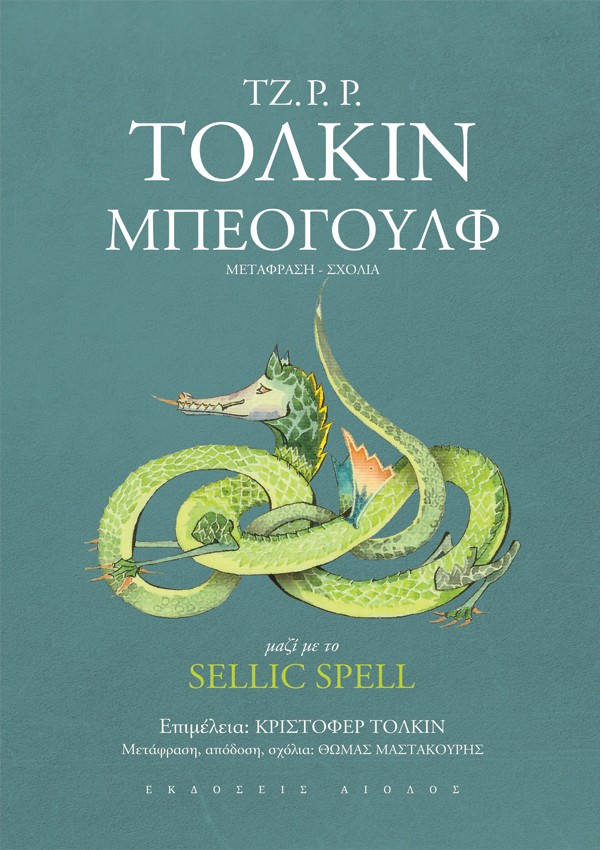
It recounts the deeds of the hero Beowulf, who, in his quest for glory and renown, confronts monstrous creatures born of primordial chaos, in a story that blends elements of myth, legend, and the history of Northern Europe. J. R. R. Tolkien, himself a professor of Anglo-Saxon at the University of Oxford, translated the epic into prose, combining his scholarly knowledge and expertise with his literary skill in a text that reveals, in all its grandeur, a world lost in the mists of myth and history.
Alongside the translation, the volume includes detailed commentary and analyses of the poem by Tolkien, as well as Sellic Spell (“Marvelous Tale”), his own retelling of Beowulf in the form of a fairy tale.
Through the text of Beowulf and Tolkien’s accompanying notes, a forgotten world is brought to light — one that profoundly influenced the professor’s later works and formed an early foundation of modern Western Europe.