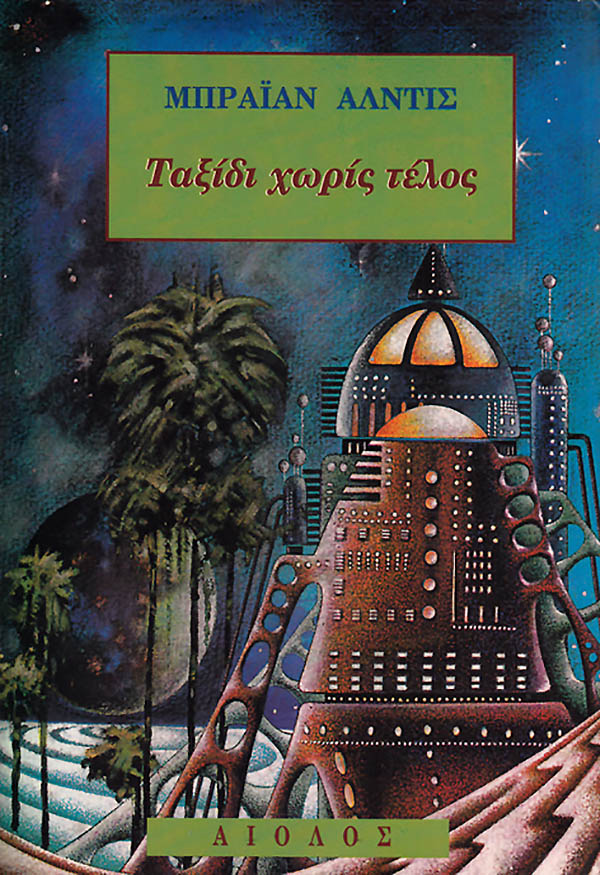
A huge spaceship travels through space without a captain and purpose. Its passengers, races hostile to each other, roam its vast corridors, which are covered by dense jungles with strange vegetation and unknown animals. Shreds of knowledge support them and intractable questions plague them: old myths about Mother Earth, the purpose of the ship’s existence, its limits, its destination. Even mutant animals struggle, with their poor half-animal, half-human minds, to discover the truth.
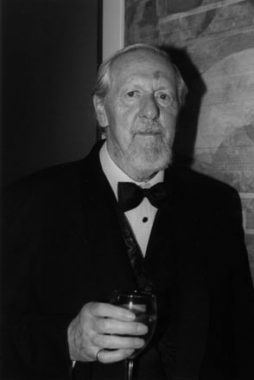
Brian Wilson Aldiss, the British science fiction writer, critic, historian, and anthologist, was born in Norfolk, England, in 1925. He began his writing career in 1954.
Over the course of his career, he enriched the science fiction genre with a remarkable body of work that includes short stories, novels, critical essays, and anthologies. The quality and originality of his writing earned him widespread acclaim, establishing him as one of the leading contemporary authors in the field and one of science fiction’s most important innovators and modernizers.

In 1959, at the World Science Fiction Convention, Aldiss was named “Most Promising New Author,” a distinction he would more than justify in the years that followed through his prolific and wide-ranging body of work.
His innovative and contemporary treatment of traditional science-fiction themes and motifs placed him among the leading figures of the New Wave movement that emerged during the 1960s. Through both his fiction and critical writings, he helped demonstrate that science fiction was a serious literary form rather than mere pulp entertainment.
In 1965, he was the Guest of Honor at the 23rd World Science Fiction Convention, and in 1969 he was voted Britain’s Most Popular Science Fiction Author by the British Science Fiction Association. He received the Ditmar Award in 1970 and the James Blish Award in 1977.
A central concern running throughout his work, explored in many different forms, is the struggle between fertility and entropy, between the rich diversity of life and the tragic silence of death. The tensions between reality and imagination, action and theory, sensation and intellect, and art and creation also occupied him throughout his career, often with remarkable intensity.
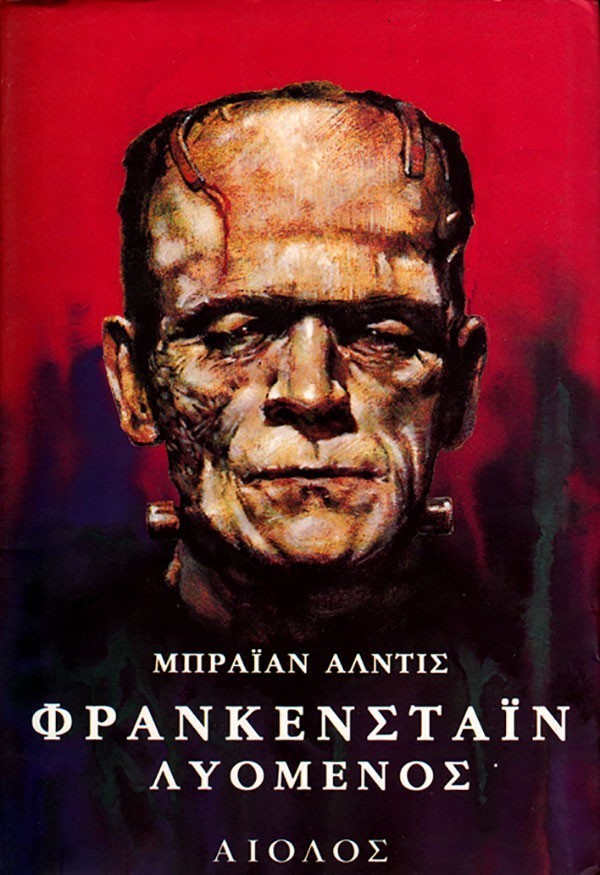
Aldiss wrote numerous novels and short stories and was an indefatigable editor and anthologist of science-fiction literature. His novels Frankenstein Unbound, Dracula Unbound, and Journey Without End are available in our catalogue.
However, hidden somewhere inside the giant ship is the control room: from there one could return it, after countless years, to its starting point or drive it to its destination. A thrilling book by Brian Aldiss that never ceases to captivate every reader, encapsulating the whole adventure of man and his anxiety towards the unknown, in a journey with no end and a forgotten beginning.