Energy is now one of the most critical sectors of the global economy, and developments—particularly in fuel prices, including oil, natural gas, and electricity—play a decisive role in shaping economic growth and consumer prosperity.
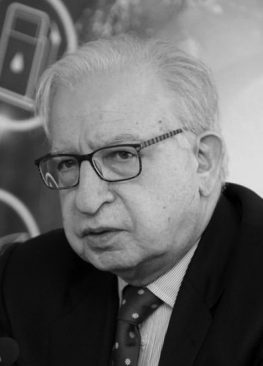
Kostas Stabolis studied Natural Sciences at the University of London and Architecture at the North East London Polytechnic (NELP), graduating with a Diploma in Architecture from the Architectural Association (AA Dip). He also holds a Master’s degree in Strategy and Innovation from the Saïd Business School at the University of Oxford.
Based in London, he worked as an independent consultant specializing in the application of solar energy in buildings. In 1977, he founded and directed one of the first international consulting firms in the field of Renewable Energy Sources (RES). He has focused extensively on the application of renewable energy in developing countries and has served as an advisor on energy policy to governments, international organizations, major corporations, and institutions.
He has also worked as a visiting professor at universities and educational institutions across Greece, the United States, Europe, and Asia. Later, based in Athens, he worked for many years as a foreign press correspondent, writing extensively on energy, environment, and technology issues for publications such as the Financial Times, Kathimerini, Estia, Imerisia, as well as numerous other newspapers and specialized journals in Greece and abroad.
He has participated as an invited speaker in numerous scientific conferences in Greece and internationally, and has published hundreds of papers in academic journals and conference proceedings, as well as a series of books on energy-related topics. In 2001, he founded and has continuously directed the specialized energy website energia.gr. In 2003, together with a small group of energy sector professionals, he co-founded the Institute of Energy for South-East Europe (IENE), of which he is currently President and Executive Director. He is also a member of the Interministerial Committee on Energy and Climate (ESDI).

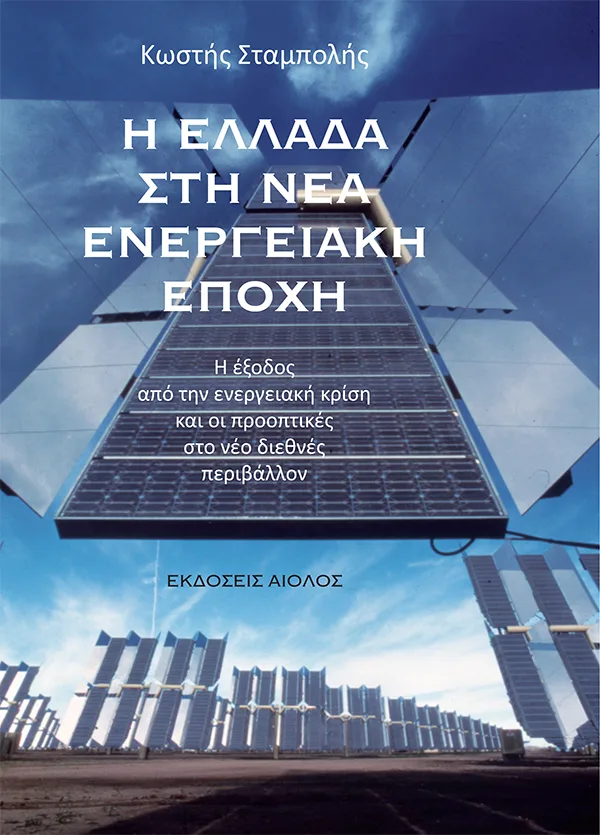
The energy crisis that began in the summer of 2021, peaked in 2022, and has continued in a milder form ever since has affected Europe most acutely, with immediate consequences for Greece.
The need to understand what exactly happened, what deeper forces lay behind the crisis, what paths out of it are beginning to emerge, and what role Greece might play in this changing landscape led to the writing of this book. The author adopts a broad and comprehensive approach, examining the causes of the crisis across a wide range of interconnected issues. Rather than focusing solely on energy itself, the book also explores the historical background to the crisis, the relationship between energy and the economy, the structure of both the global and Greek energy balance, the factors driving the continuous rise in energy demand, and climate change—along with the way alarmist rhetoric surrounding it has often undermined the calm and objective analysis the subject requires.
A substantial part of the book is devoted to the energy transition currently underway, centred on the growing role of cleaner fuels in the global energy mix, the difficulties involved in achieving a smooth transformation, and the crucial importance of developing and adopting new technologies. The author argues that the vision of a world powered entirely by clean energy can become a reality, provided that the transition now being pursued does not lead to economic collapse.
Other key themes explored include the role of energy in shipping and Greece’s comparative advantage in the sector, the importance of energy in foreign policy, and the new geopolitical environment in which Greece is now called upon to operate. The book also stresses the urgent need for the country to reduce its exceptionally high dependence on imported energy, arguing that meaningful and sustainable economic recovery can only be achieved through policies aimed at greater energy self-sufficiency.