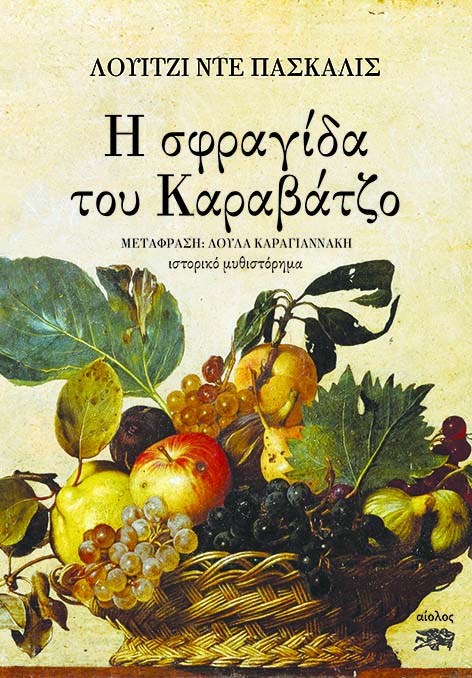
Beyond his extraordinary works, Caravaggio also left behind a mystery: that of his untimely death. His short life was turbulent and provocative, and the circumstances of his death remain enigmatic. In The Seal of Caravaggio, Luigi De Pascalis offers his own interpretation of the story.
Luigi De Pascalis was born on 7 August 1943 in Lanciano, Abruzzo, and currently lives in Rome.
His works span a wide range of genres, including fantasy, historical and philosophical fiction, and mystery. He is also well known outside Italy, with his books reaching an international readership.
Luigi De Pascalis has published numerous short stories in newspapers and magazines, and his books have been translated and circulated in France, Germany, and the United States.
His short fiction has appeared in the American anthology The Fantastic Swordsmen, alongside works by L. Sprague de Camp (who described him as a “Mediterranean Tolkien”), Lord Dunsany, Robert E. Howard, H. P. Lovecraft, and Michael Moorcock.
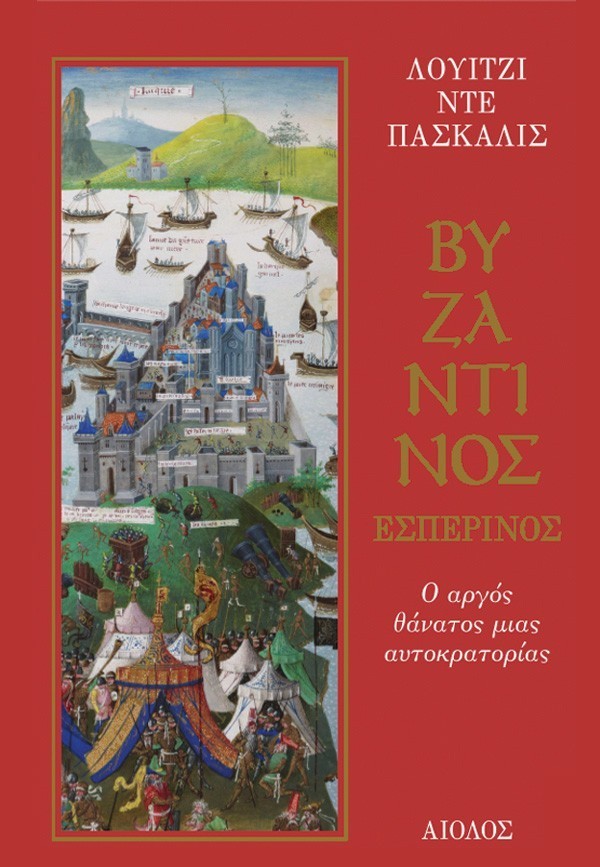
His novel Il Signore delle Furie Danzanti (The Lord of the Dancing Furies, 2006) launched a mystery series set in 4th-century AD Ancient Rome, featuring the protagonist Gaius Celsus. His work Byzantine Vespers was nominated in 2016 for Italy’s major literary prize, the Premio Strega, and also received the historical fiction award Premio Acqui Storia.
The author has been awarded twice the fantasy literature prize Premio Italia, and also received the Carlo Lorenzini Award for his illustrated graphic novel Pinocchio (2011).

The young Caravaggio arrives in Rome and is hired to work in the studio of the renowned painter Cavalier d’Arpino. He paints mostly still lifes, although he much prefers portraiture and longs to take on greater artistic challenges. But Cavalier d’Arpino is not only a painter — he is also an art dealer specializing in works imported mainly from Northern Europe.
Caravaggio becomes fascinated by a small painting that has just arrived at the workshop, a work by Hieronymus Bosch. It depicts, in meticulous detail, a daring and bewildering tangle of figures, some naked and others clothed. Determined to prove to his master that he is capable of painting human figures — and drawn to the painting by an inexplicable attraction — Caravaggio secretly copies it and keeps the replica for himself. What he does not realize is that this act will soon change his life forever. Hidden within the painting is a precious secret, and someone is prepared to do anything to possess it.
What mystery lies concealed behind the work of the great painter?
At the very beginning of his career, Caravaggio finds himself entangled in an affair that will follow him throughout his short yet extraordinary life.