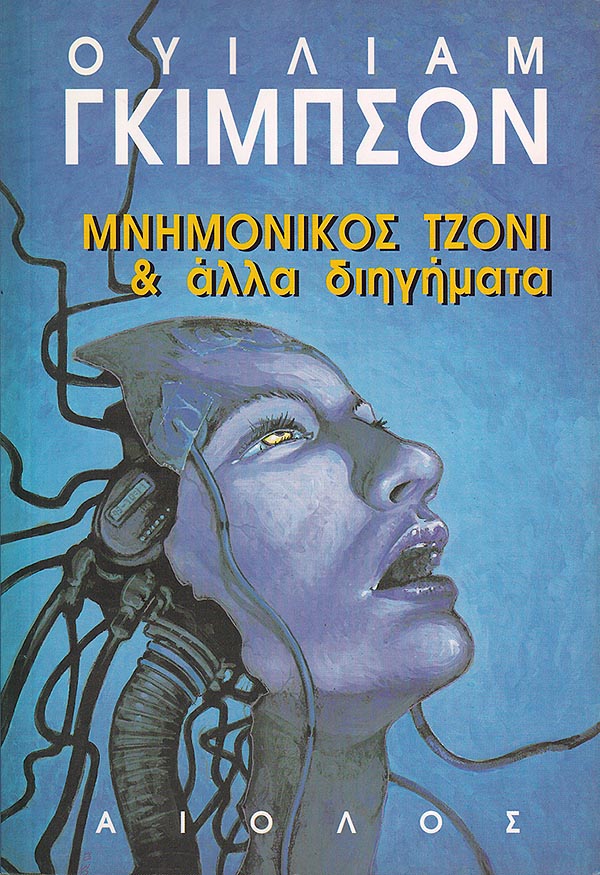
Ten short stories by William Gibson are included in this book; ten true gems that have influenced science fiction writers and audiences in a way few contemporary works have.
William Gibson was born in the United States in 1948. He grew up in Virginia, where, after the death of his father, he was introduced to the Beat movement and science fiction.
In 1968, during the Vietnam War era, he moved to Canada to avoid military conscription, and he has lived there ever since.
His first published work was Fragments of a Hologram Rose (1977). In 1986, his short story collection Burning Chromewas released, which includes “Johnny Mnemonic”, later adapted into a film starring Keanu Reeves.
Gibson gained widespread fame with his “Sprawl Trilogy”: Neuromancer (1984), Count Zero (1986), and Mona Lisa Overdrive (1988). Neuromancer won the Hugo, Nebula, and Philip K. Dick Awards and became a cornerstone of the cyberpunk movement in science fiction.
He is often regarded as a “prophet” of the Internet and the World Wide Web. His works, as well as those of writers influenced by him, depict a dark futuristic world in which real power lies in the hands of multinational corporations, and the most valuable commodity is information stored in computers connected through a vast virtual network known as cyberspace.
In this world, daring individuals connect their brains directly to the network in order to steal information—entering a digital realm that is as real and tangible to them as physical reality, but full of lethal dangers.
In 1990, he co-authored The Difference Engine with Bruce Sterling. In 1993, he published Virtual Light. Throughout the 1990s, Gibson produced the “Bridge Trilogy”. In 1996 came Idoru, followed by All Tomorrow’s Parties (1999), Pattern Recognition (2003), and Spook Country (2007).
Johnny Mnemonic has become famous through the film of the same name; in Hinterlands, contact with an alien civilization turns out to be a nightmare; in The Winter Market, a strange woman becomes a computer program; and when you read Dogfight, where videogames are holographically projected and played using the brain, adrenaline can give you spasms.
As for Burning Chrome, cybercowboys, experienced Internet divers and hackers will certainly feel that it was written for them. A world more magical than any Paradise, more real than any Hell.