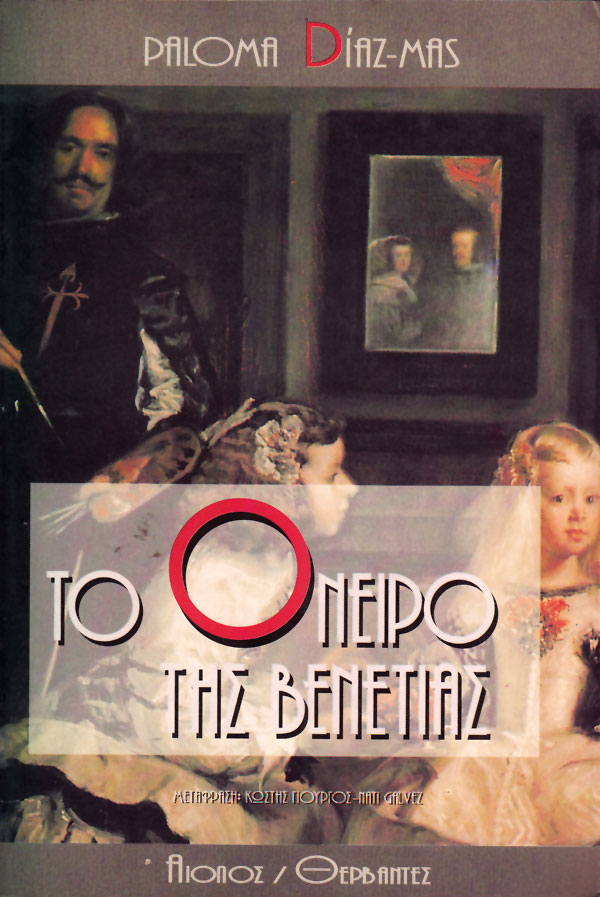
In the mid-17th century, a freed slave paints the portrait of Doña Gracia de Mendoza, a famous courtesan of the time, and of a boy, her protégé, lover, and finally husband, Pablo de Corredera. From then on, the portrait undergoes countless adventures, changes hands many times, travels to exotic places, is mistreated, mutilated, repainted, and is seen by many in many ways across many eras.

Paloma Díaz-Mas was born in Madrid in 1954 and lives in Vitoria, in Spain’s Basque Country, where she works as a professor.
She has published short stories, novels, and essays. In her native country, her books have received considerable critical acclaim, with reviewers praising both the elegance of her writing and the wide range of her literary accomplishments.
Each new book by Paloma Díaz-Mas represents an exploration of new literary territory.
Her novel The Dream of Venice (El sueño de Venecia) won the prestigious Premio Herralde de Novela in 1992.
In our time, someone discovers it, and through the process of its restoration the true story of those depicted in it is revealed—or is it? In The Dream of Venice, the Spanish writer has woven with great skill an intricate tapestry, following Henry James’s guidelines, whose folds and patterns are gradually revealed and mutually illuminated across the book’s five chapter-episodes, while still, even after the final knot of its weaving, retaining its enigmatic charm—magnified by the reader’s sense of having wandered through a labyrinth whose spell they do not wish to escape.